
Call center dashboards have been part of contact center operations for years. Most leaders are familiar with charts and reports that track things like average handle time, call volume, and service level. These views are useful—but they rarely help teams understand what’s happening right now or what needs attention during the day.
The challenge isn’t data availability. Contact centers already collect massive amounts of information from calls, chats, surveys, and QA reviews. The real problem is timing and clarity. When data is locked in reports that only update after the fact, teams are left reacting to issues instead of preventing them.
This blog explores how contact centers can move beyond static reporting and use dashboards to support better decisions while work is happening. We’ll look at why traditional dashboards fall short, how real-time views change day-to-day management, how Auto QA and predictive CSAT add context, and how leading organizations use this approach to improve Quality Assurance (QA), Customer Satisfaction (CSAT), and First Call Resolution (FCR).
1. Why Do Traditional Dashboards Fall Short?
Traditional dashboards were built to summarize performance, not guide action. They typically show what happened yesterday, last week, or at the end of the month. That information is helpful for leadership reviews, but it doesn’t help supervisors or managers respond to issues as they unfold.
Another limitation is what these dashboards measure. Most focus heavily on volume and efficiency—how many calls were handled, how long they took, and whether service level targets were met. What they often miss is the customer experience behind those numbers.
For example, a dashboard might show shorter handle times across a team. On paper, that looks like progress. But without additional context, leaders may not realize agents are rushing through calls, skipping key explanations, or failing to confirm resolution. The result is more repeated contacts and frustrated customers—problems that don’t show up until later.
There’s also the issue of delayed updates. When dashboards refresh slowly, supervisors don’t see small problems until they become bigger trends. By the time CSAT drops or repeat calls spike, the same issue may have affected hundreds or thousands of customers.
Traditional dashboards show results after the fact. They don’t help teams correct issues in real time.
2. What Does Real-Time Visibility Change for Contact Centers?
When performance data updates in real time, it changes how teams manage the operation. Instead of looking backward, leaders can see what’s happening across calls, behaviors, and outcomes as patterns start to form.
This kind of visibility helps teams spot early warning signs. Supervisors can see when certain call types are driving repeat contacts, when QA results begin to shift around a specific behavior, or when resolution quality drops during peak volume.
For example, if a system update causes confusion for customers, real-time views can quickly show an increase in repeat calls or longer call durations for that issue. Rather than waiting for end-of-week reports, teams can address the root cause the same day—updating guidance, reinforcing talking points, or escalating the issue to another department.
How Supervisors Use Real-Time Data During the Day
On a practical level, supervisors use real-time data to decide where to focus their time. Instead of reviewing calls at random or waiting for scheduled QA sessions, they can prioritize interactions that show higher risk or opportunity.
If customers are calling back with the same problem, supervisors can step in immediately and coach agents on clearer explanations or confirm resolution steps. If certain agents are consistently delivering strong results, supervisors can recognize and reinforce those behaviors while they’re still at top of mind.
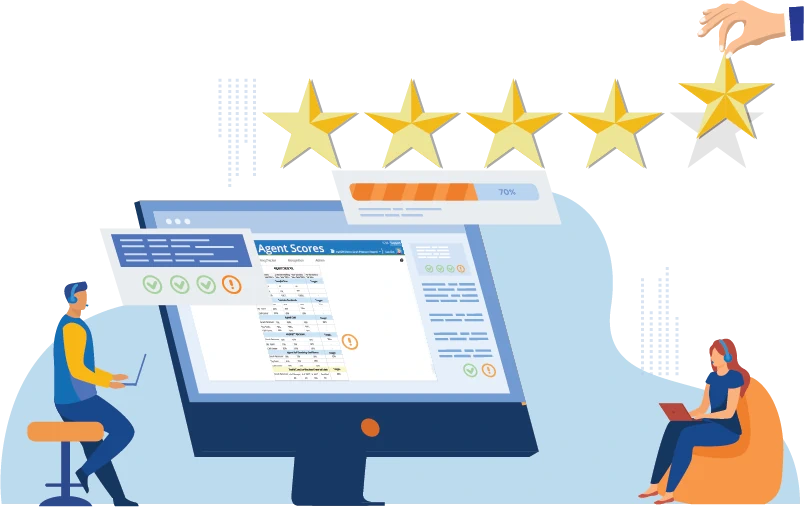
This approach turns performance data into a daily management tool, not just something reviewed in hindsight.
3. How Can Real-Time Data Support Coaching and Agent Self-Improvement?
Real-time data is most useful when it helps people improve while work is still happening—not weeks later in a report. When performance trends are easy to view and update throughout the day, such as through platforms like the mySQM™ QA Software—coaching no longer depends on one-off call reviews or end-of-month summaries.
Instead of focusing on isolated examples, supervisors can see patterns forming across many interactions. This makes coaching more practical and easier to act on. Rather than saying, “On this one call, you missed a step,” supervisors can explain what’s happening across similar calls and why it matters.
Agents also benefit from this visibility. When agents are able to see their own trends over time—such as how often customers call back, where quality scores change, or when interactions tend to break down—they can start adjusting their approach on their own. This allows improvement to happen sooner, without waiting for a formal coaching session.
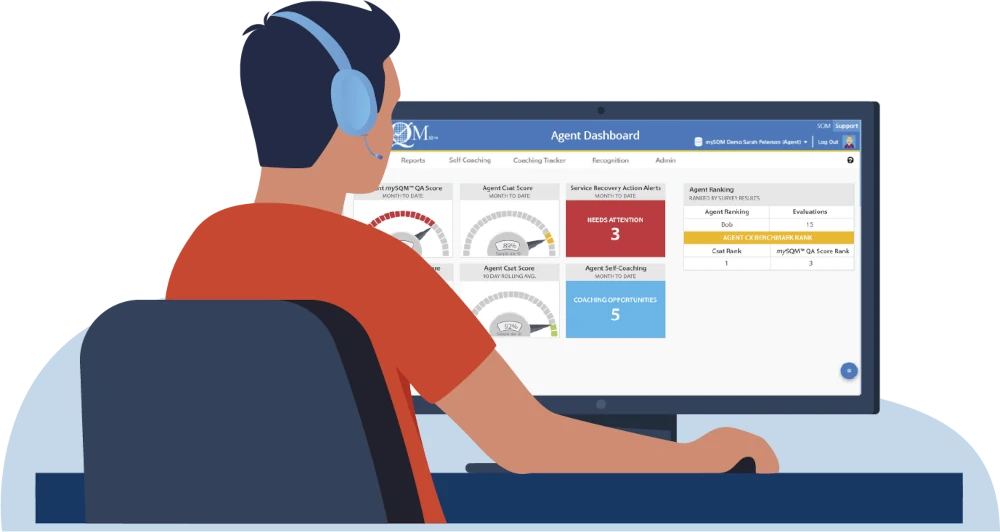
For example, an agent may notice that repeat calls are higher when they handle certain issue types. With that awareness, they can slow down explanations, confirm next steps more clearly, or change how they close the call. These small changes can reduce repeat contacts before a supervisor ever needs to step in.
This approach shifts coaching from reactive to ongoing. Supervisors still guide and support, but agents play a more active role in improving their own performance. When everyone is working from the same up-to-date view, coaching becomes more timely, more consistent, and more effective.
4. How Do Teams Use Real-Time Data to Sustain Performance Improvements?
Real-time data isn’t only useful for immediate action, it also supports steady, long-term improvement. When QA, CSAT, and FCR are viewed together, leaders can see whether changes are actually working.
For example, if a team focuses on improving ownership, leaders can track whether first call resolution improves and whether customer satisfaction follows. If FCR improves but CSAT does not, that signals something is still missing from the experience.
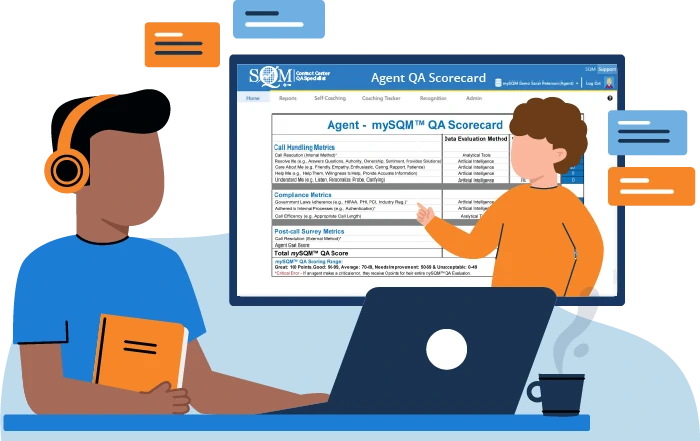
SQM Research has consistently shown that resolving issues on the first call is one of the strongest drivers of customer satisfaction. But resolution only counts if the customer feels the issue is truly completed. Seeing how these measures move together helps teams avoid focusing on the wrong fixes.
Over time, this creates a more reliable improvement cycle: identify issues early, take targeted action, review results, and adjust as needed.
5. Why Is It Important to Connect QA, CSAT, and FCR?
Many contact centers track QA, CSAT, and FCR separately. While each measure is valuable on its own, none tells the full story alone.
QA results show whether agents followed the guidelines, but the results don’t explain how the customer felt. CSAT scores show sentiment, but not what caused it. FCR shows whether the issue was resolved, but not how smooth or frustrating the interaction was.
When these measures are viewed together, patterns become clearer. For example, a team may score well on QA and still struggle with CSAT because agents are compliant but not reassuring the customer. Or FCR may be high, but CSAT low, because customers feel rushed or unclear about next steps.

Connecting these measures helps teams focus on behaviors that improve both efficiency and experience.
6. How Do High-Performing Contact Centers Put Real-Time Visibility into Action?
High-performing contact centers don’t treat dashboards as leadership-only tools. They use real-time data as part of everyday operations.
Supervisors rely on it to prioritize coaching and support. Agents use it to understand expectations and track progress. Leaders use it to spot trends, allocate resources, and address issues before they grow.
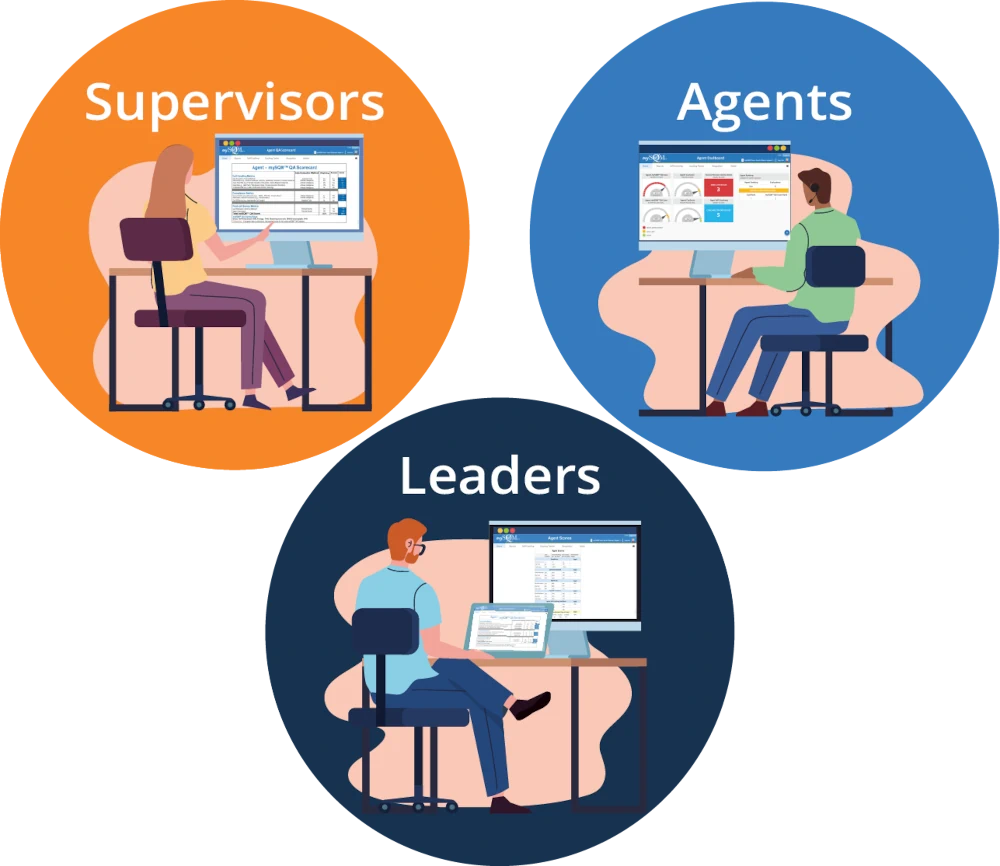
For example, when repeat calls begin to rise in a specific queue, teams can respond quickly—adjusting staffing, updating guidance, and reinforcing behaviors—without waiting for end-of-week reports or formal reviews.
This shared view creates alignment across the organization. Everyone works from the same information, which leads to faster decisions, clearer communication, and more consistent service.
Why Real-Time Performance Visibility Is Now Essential
Real-time visibility changes how contact centers think about improvement. Instead of reviewing performance after problems appear, teams can recognize patterns early and respond while interactions are still happening.
This shift allows contact centers to move away from reactive fixes and toward more consistent day-to-day improvement. Small adjustments—made early—can prevent larger issues, reduce repeat contacts, and protect the customer experience.
As expectations continue to rise, the most successful contact centers won’t be defined by how much data they collect. They’ll be defined by how effectively they use real-time visibility to support better decisions, stronger coaching, and more reliable outcomes across the operation.