
After-call work has long been treated as a necessary step between customer interactions — something agents simply need to complete before moving on to the next call. But as contact centers handle higher volumes, more complex conversations, and rising customer expectations, that “in-between” work is playing a much larger role in overall efficiency and customer experience.
Rather than relying solely on manual note-taking and rushed follow-ups, many contact centers are now turning to AI to simplify after-call work. By reducing administrative effort and improving consistency, AI is helping teams rethink how work gets done after the call ends — and why it matters.
Why Does After-Call Work Matter More Than Many Contact Centers Realize?
After-call work includes everything agents do once a customer interaction ends — documenting what happened, updating systems, and confirming next steps. While these tasks often happen behind the scenes, they directly influence agent availability, data accuracy, and how smoothly future customer interactions unfold.
For years, after-call work has been handled manually. Agents type summaries from memory, move between multiple systems, and rush to wrap up before the next call arrives. While familiar, this approach was never designed for today’s contact centers, where interactions are more detailed and customers expect information to follow them seamlessly.
As contact centers scale, even small inefficiencies in after-call work can have a noticeable impact. Longer wrap-up times reduce capacity, incomplete notes create confusion, and missed follow-ups undermine customer trust. That’s why after-call work is no longer just an operational detail — it’s a core part of the customer experience.
What Makes Manual After-Call Work So Challenging?
Manual after-call work creates friction, even when agents are doing everything right.
Time is the most obvious challenge. Every minute spent writing notes or updating systems is a minute an agent isn’t available to help the next customer. Over the course of a day, this contributes to longer wait times and added strain on already busy teams.
Consistency is another issue. After-call notes depend entirely on the individual agent. Some capture details thoroughly, others keep notes brief, and some unintentionally leave out key context. This makes it harder for supervisors, QA teams, and future agents to rely on the information.
Manual after-call work also increases mental fatigue. Agents often finish emotionally charged or complex calls and immediately switch into documentation mode. Repeating this cycle throughout the day can be draining and contributes to burnout over time.

Finally, manual processes increase the risk of missed follow-ups. When agents are rushed or distracted, callbacks, escalations, or promised actions can be delayed — or forgotten altogether.
How Is AI Changing After-Call Work in Modern Contact Centers?
AI is reshaping after-call work by taking over tasks that slow agents down and introducing greater consistency into the process. Rather than relying on memory and manual data entry, AI supports agents by capturing, organizing, and acting on information automatically.
AI-Generated Call Summaries
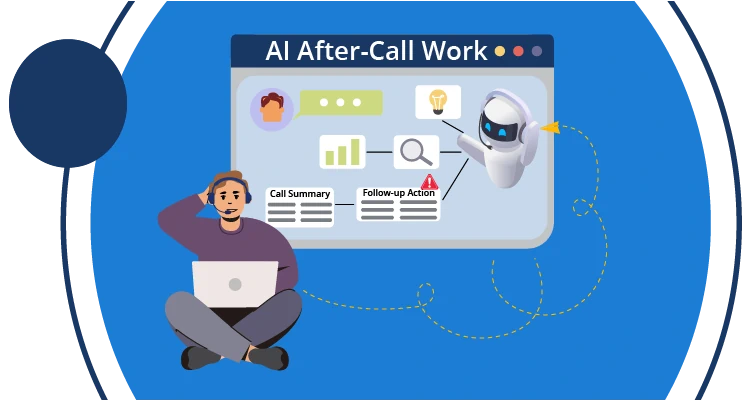
AI can analyze conversations and generate structured summaries that capture the reason for the call, key actions taken, and next steps.
When a call ends, agents see a pre-written summary already populated in the system. Instead of starting from scratch, they review, make small edits if needed, and save. What once took several minutes now takes seconds, and the summary is often clearer and more consistent than manual notes.
Automatic Call Categorization and Tagging
Manually selecting call reasons, outcomes, or sentiment tags adds time and inconsistency to after-call work. AI can identify these elements automatically based on what was discussed.
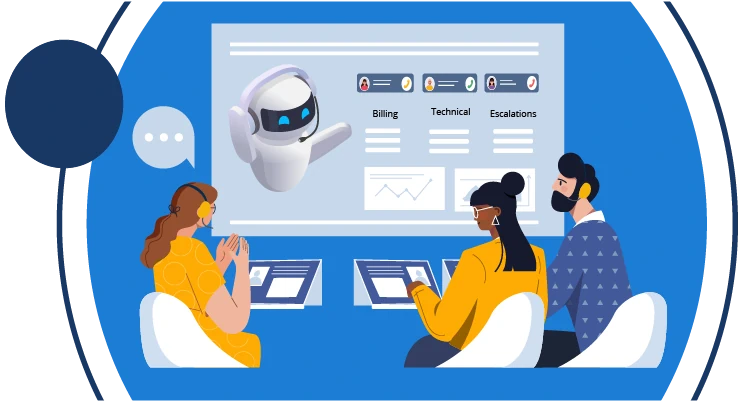
In practice, calls are categorized as billing issues, technical support requests, cancellations, or escalations without agent input. This improves reporting accuracy and ensures call data is classified the same way across the organization.
Smarter Follow-Up Actions
After-call work isn’t just about documentation — it’s also about ensuring next steps happen. AI can recognize when follow-up actions are needed and prompt or trigger them.
If a customer needs a callback or confirmation email, the system flags it immediately or initiates the task automatically. This reduces the chance that important actions are missed during busy periods.
CRM Auto-Population and Fewer Systems to Manage
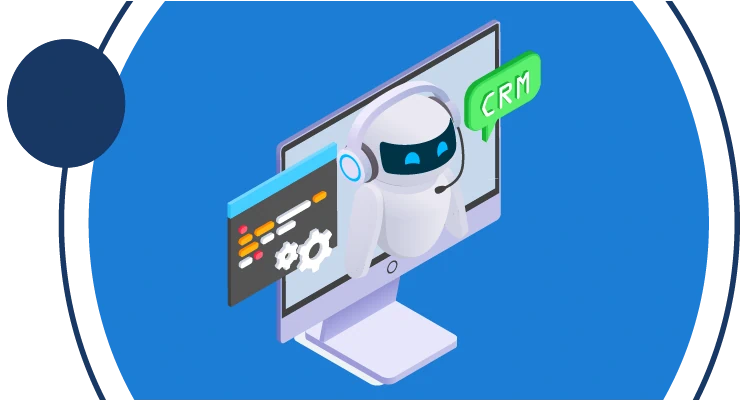
Agents often spend time copying information between tools. AI reduces this by pulling relevant details from the conversation and populating CRM fields automatically.
Instead of switching between systems, agents review and confirm pre-filled information. This keeps records accurate while significantly reducing wrap-up time and frustration.
Reduced Cognitive Load for Agents
One of the most overlooked benefits of AI in after-call work is how much mental strain it removes.
Agents no longer need to remember every detail of long or complex calls. AI captures information in real time, allowing agents to focus fully on the conversation — not on how they’ll document it afterward.
What Are the Business Benefits of Using AI for After-Call Work?
Once AI is embedded into after-call workflows, the impact extends far beyond faster wrap-up times. What begins as an improvement to agent efficiency quickly becomes a broader business advantage — influencing capacity planning, customer experience, data reliability, and long-term operational performance.
Increased Capacity Without Adding Headcount
When AI assists with summaries, tagging, and follow-up actions, agents spend far less time wrapping up each interaction. Even small reductions in wrap-up time can meaningfully increase overall capacity and improve service levels.
More Reliable Data for QA, CX, and Performance Management
AI-supported after-call work produces cleaner, more consistent interaction data across the organization. Standardized summaries and automated categorization reduce variation caused by individual note-taking styles. For leaders, this means higher-confidence insights that support quality assurance, coaching, trend analysis, and CX measurement.
Improved Customer Experience Across the Entire Journey
Accurate and complete after-call work ensures that future interactions start with the right context. Customers are less likely to repeat themselves, follow-ups happen as promised, and issues move forward without unnecessary delays. Over time, this consistency strengthens first-call resolution and builds trust across the customer journey.
Stronger Workforce Stability and Lower Burnout Risk
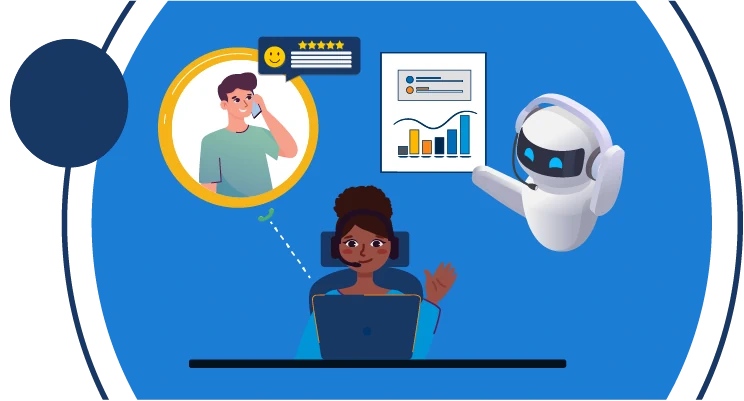
Repetitive tasks and less administrative pressure help reduce burnout and disengagement. For organizations, this often translates into better retention, lower hiring costs, and a more experienced frontline workforce.
Clearer Visibility Into Contact Center Performance
With more consistent after-call data, leaders gain clearer insight into recurring issues, operational gaps, and performance trends. This visibility supports better decision-making, more targeted improvements, and stronger alignment between CX goals and operational execution.

These benefits also reinforce the value of quality assurance and CX measurement. SQM Research shows that Auto QA helps contact centers reduce manual after-call work while improving consistency, compliance, and CX insights. When after-call work is streamlined and accurate, performance insights more closely reflect what customers actually experience.
Why After-Call Work Is a Key Part of the Future Contact Center
As contact centers evolve, after-call work is no longer just an administrative task — it’s becoming a strategic advantage.
Customers expect fast, seamless experiences where information follows them across interactions. Agents need tools that reduce complexity, not add to it. AI-powered after-call work supports both by improving accuracy, consistency, and speed behind the scenes.
By reducing manual effort and capturing better data, AI helps contact centers scale without sacrificing quality. It allows agents to stay focused on meaningful conversations, strengthens customer relationships, and provides leaders with clearer insights into performance and trends.
In the future contact center, success won’t be defined by how quickly agents move on to the next call — but by how well each interaction is captured, understood, and built upon. Streamlining after-call work with AI is a key step toward that future.