
Repeat contacts are often treated as unavoidable. Customers call back to confirm details, check a status, or ask a follow-up question—and over time, that starts to feel like “just part of the job.”
But repeat contacts come with real costs. Not always in a single line item or budget report, but in the form of extra time, added staffing pressure, customer frustration, agent burnout, and decisions made without a clear picture of what’s actually driving work.
Because these costs don’t show up all at once, they’re easy to underestimate. What starts as a few extra calls can quietly turn into busier queues, stretched teams, and growing inefficiencies across the contact center. Over time, repeat contacts become woven into daily work, making their true cost harder to see.
In this blog, we break down the hidden costs of repeat contacts in the call center—the ripple effects that build up when issues aren’t fully resolved the first time and customers have to reach out again.
What Are the Real Impacts of Repeat Contacts on Call Center Performance?
Repeat contacts rarely affect just one area. Their impact spreads across operations, experience, and decision-making.
Because repeat contacts don’t usually spike all at once, their effects can feel subtle. They blend into everyday volume and become part of what teams consider “normal.” Over time, this creates pressure in multiple areas at the same time—queues feel heavier, agents feel stretched, and leaders have a harder time pinpointing what’s driving the strain.
What makes repeat contacts especially challenging is that their effects show up in different ways across the organization. A single follow-up call may not seem significant on its own, but when those calls add up day after day, they influence everything from wait-times and customer satisfaction to staffing plans and coaching priorities.
Below are seven ways repeat contacts shape contact center performance.
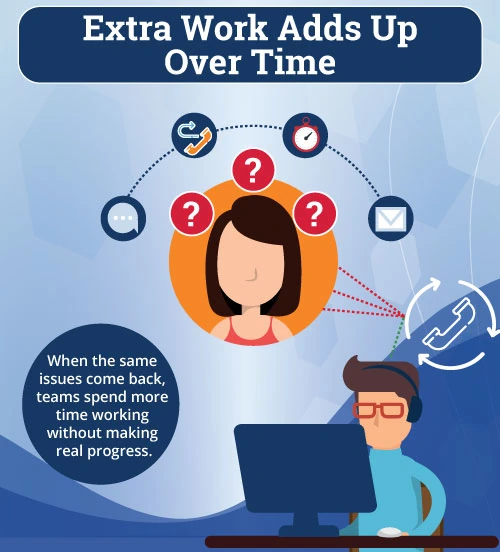
1. Extra Work Adds Up Over Time
Every repeat contact means the same issue is handled again. That increases workload without solving anything new.
When customers call back about something that should already be resolved, the contact center ends up doing the same work twice. Over time, those extra interactions add up—using agent time, queue space, and system resources that could have been spent on new issues.
What makes this especially hard to spot is that repeat contacts blend into daily volume. Leaders see higher call counts and assume demand is rising, when in reality the same issues are simply coming back.
A billing question that could be resolved in one conversation may turn into two or three calls because details weren’t fully explained the first time. Each call feels routine on its own, but together they quietly increase effort across the organization. Over time, this repeated effort requires more agent hours, and more coverage to handle the same work.
2. Longer Wait Times Affect Everyone
Repeat contacts don’t only impact the customers who call back. They affect everyone waiting in line.
As repeat calls increase, agents spend more time handling the same issues again. That means fewer agents are available for new callers, which naturally leads to longer wait times and more strain on service levels.
A customer calling with a simple request—like a password reset or address change—may wait longer because agents are tied up handling follow-up calls that could have been avoided. Even customers who reached out once and expected resolution end up feeling the impact.
This is easy to overlook because it doesn’t show up as a “repeat contact” problem. Instead, it shows up as fuller queues, higher abandonment, and customers growing impatient before they ever reach an agent.
Over time, these longer waits shape how customers view the entire support experience. Even when their original issue had nothing to do with repeat calls, the delay becomes part of how they judge the service as a whole.
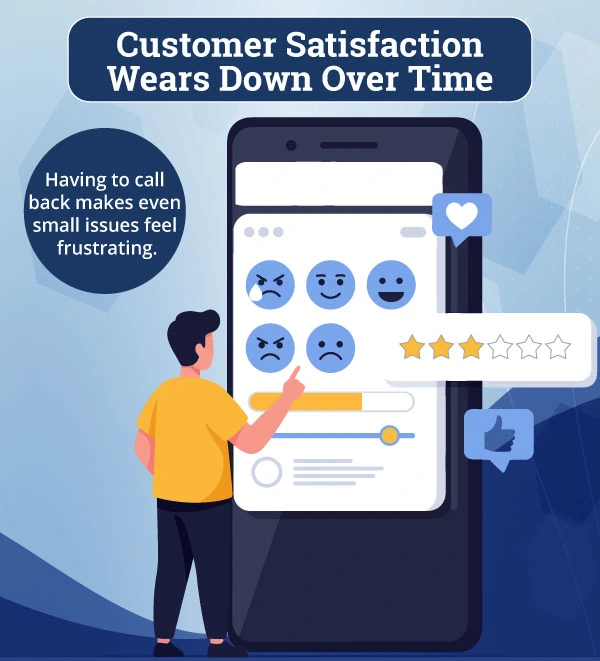
3. Customer Satisfaction Wears Down Over Time
Customers don’t mind calling support once—but they do mind having to call back.
Each repeat contact adds effort. Customers may need to explain the issue again, repeat account details, or go through the same steps more than once. Even when agents are helpful and professional, the experience starts to feel inefficient.
Frustration builds quickly. One follow-up might be acceptable. Multiple follow-ups usually aren’t. Confidence drops, trust fades, and satisfaction follows.
SQM Research consistently shows that satisfaction is closely tied to how easy it is to get an issue fully resolved. Customers remember how many times they had to reach out—not how fast each interaction was handled.
In many cases, repeat calls happen because customers leave the first interaction unsure about next steps. They call back not because something broke, but because they don’t feel confident the issue is fully resolved.
4. Resolution Numbers Look Better Than Reality
Repeat contacts don’t just affect how customers feel—they affect how performance looks.
First Call Resolution can appear strong because calls are marked “resolved” once internal steps are completed. But resolution from a system standpoint doesn’t always match resolution from the customer’s point of view.
This creates a blind spot. Resolution numbers look steady, while repeat contacts quietly continue in the background. Leaders may believe performance is holding up, even as the same issues cycle back through the contact center.
For example, an agent submits a service request correctly and closes the call. Days later, the customer calls back because they didn’t understand when the change would take effect or what to do next. On paper, the issue was resolved. In practice, the work returned.
The challenge isn’t just the extra interaction—it’s the delayed realization that resolution isn’t as complete as the numbers suggest.
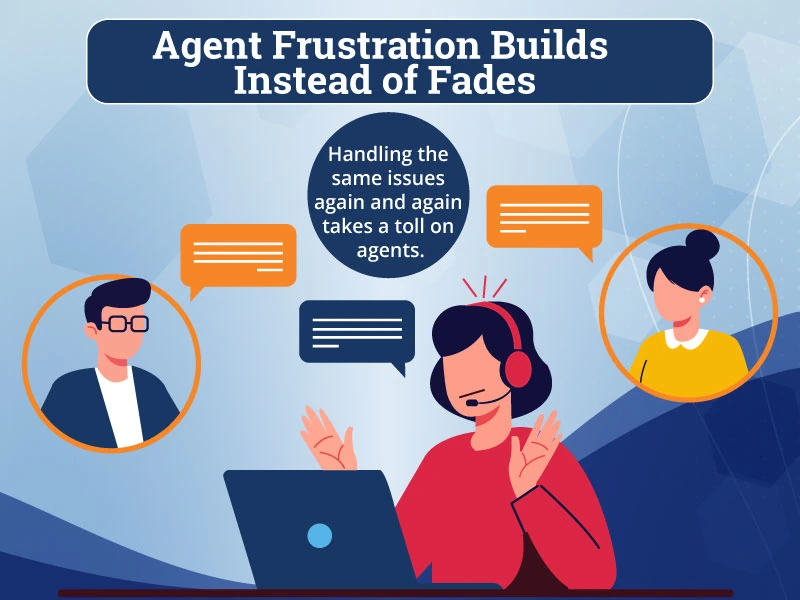
5. Agent Frustration Builds Instead of Fades
Handling the same issues again and again takes a toll on agents.
Many agents can quickly tell when calls are avoidable. Repeating the same work, day- after -day leads to frustration, especially in busy environments where queues never seem to shrink.
Agents may feel stuck redoing work instead of solving new problems. Even strong performers can lose motivation when repeat calls are driven by unclear communication or process gaps outside their control.
This doesn’t show up immediately. It appears over time as lower engagement, higher turnover, and uneven performance across teams—often long after the underlying issues have taken root.
6. Coaching Gets Pushed to the Side
As repeat contacts increase, supervisors spend more time reacting and less time developing their teams.
Queue management, escalations, and service pressure leave little room for coaching conversations. Feedback gets shortened, delayed, or skipped altogether.
Over time, the behaviors that drive repeat contacts—such as unclear explanations, rushed call closures, or missed confirmation—stick around because they’re never fully addressed. This lack of coaching allows the same issues to resurface again and again.
The cycle feeds itself: repeat contacts create pressure, pressure reduces coaching, and unresolved behaviors continue.
7. Planning Decisions Based on Incomplete Signals
Repeat contacts make it harder to understand what’s really driving workload.
When repeat calls are mixed in with new contacts, overall volume looks higher than it truly is. Leaders may plan schedules and coverage based on what seems like growing demand, when unresolved issues are pushing the same customers back into the queue.
Teams stay busy, pressure builds, and it feels like more resources are needed—even though part of the workload could have been avoided. Over time, decisions focus on managing volume instead of reducing what’s causing it.

Why These Hidden Costs Matter
Repeat contacts rarely show up as a single problem that’s easy to fix. Instead, their cost is felt across the contact center—through extra effort, longer waits, frustrated customers, burned-out agents, and plans built on incomplete information.
That’s what makes repeat contacts so expensive over time. Not because of any one call, but because the same issues quietly consume more attention, capacity, and resources day after day. When repeat contacts become part of everyday volume, teams often plan around them instead of questioning why the work keeps coming back.
Tools like the mySQM™ Customer Service QA Software help bring these patterns into focus by connecting customer feedback, resolution outcomes, and quality trends in one place. This shared visibility helps leaders see where repeat contacts are shaping performance behind the scenes—not just adding volume.
Understanding the true cost of repeat contacts is the first step toward changing how they’re viewed. When leaders can clearly see how repeat contacts affect time, effort, and decision-making across the contact center, they’re better positioned to focus attention where it matters most.